 Language · Sound
Language & sound
The 2019 report describes children exploring how sounds are produced and connecting pronunciation with physical sensations in the throat, lips, tongue and palate.
Visit the school on Saturday, October 17 and November 14. Book a place
Kisalaya Vidya Mandir is a primary school at BIT Mesra, Ranchi. Publicly documented accounts describe an experience-based approach built around Mind Opening Techniques (P-MOT), with strong emphasis on language, mathematics, science and learning from the world around children.
The school’s documented history connects Kisalaya Vidya Mandir Education Society with the BIT Mesra community and describes a learning system influenced by Indian knowledge traditions.
Gyanodaya Trust describes P-MOT as a core part of the school’s learning system, derived from the knowledge tradition associated with Rishi Panini.
A 2019 Jagran feature describes children learning through observation, touch, sound, plants and practical activities rather than relying only on written explanation.
The reported examples include using simple objects for mathematics and exploring sound, colour, plants and other phenomena around the campus.
A current grade-by-grade syllabus is not publicly published in the sources reviewed, so these cards describe documented learning practices rather than inventing a curriculum.
Language · SoundThe 2019 report describes children exploring how sounds are produced and connecting pronunciation with physical sensations in the throat, lips, tongue and palate.
MathematicsThe reported approach uses tangible materials such as matchsticks to make addition and number relationships easier to see and manipulate.
Nature · ScienceA 2019 report described children observing and using plants, leaves, flowers, colours, smells and textures as part of learning.
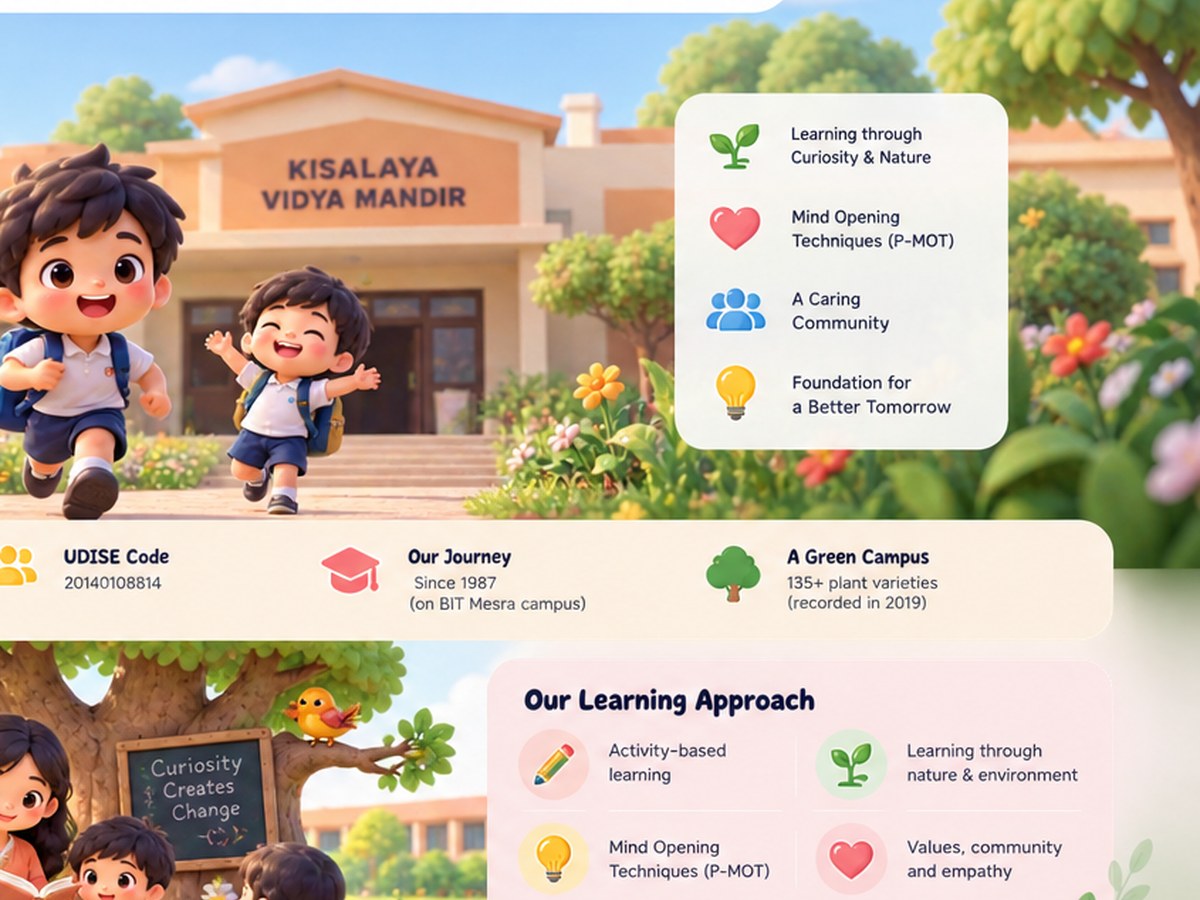
A 2019 feature reported that the school campus contained 135 varieties of plants and that children used leaves, flowers and other natural materials while learning about colour, smell, taste and the environment. This is historical reporting, not a current audited facilities count.
The strongest publicly indexed visual material I found is from a 2019 Jagran feature about Kisalaya's teaching approach. Google Maps currently provides the school's location listing; its user-uploaded photos and videos should be used only with the appropriate platform/licensing permissions.
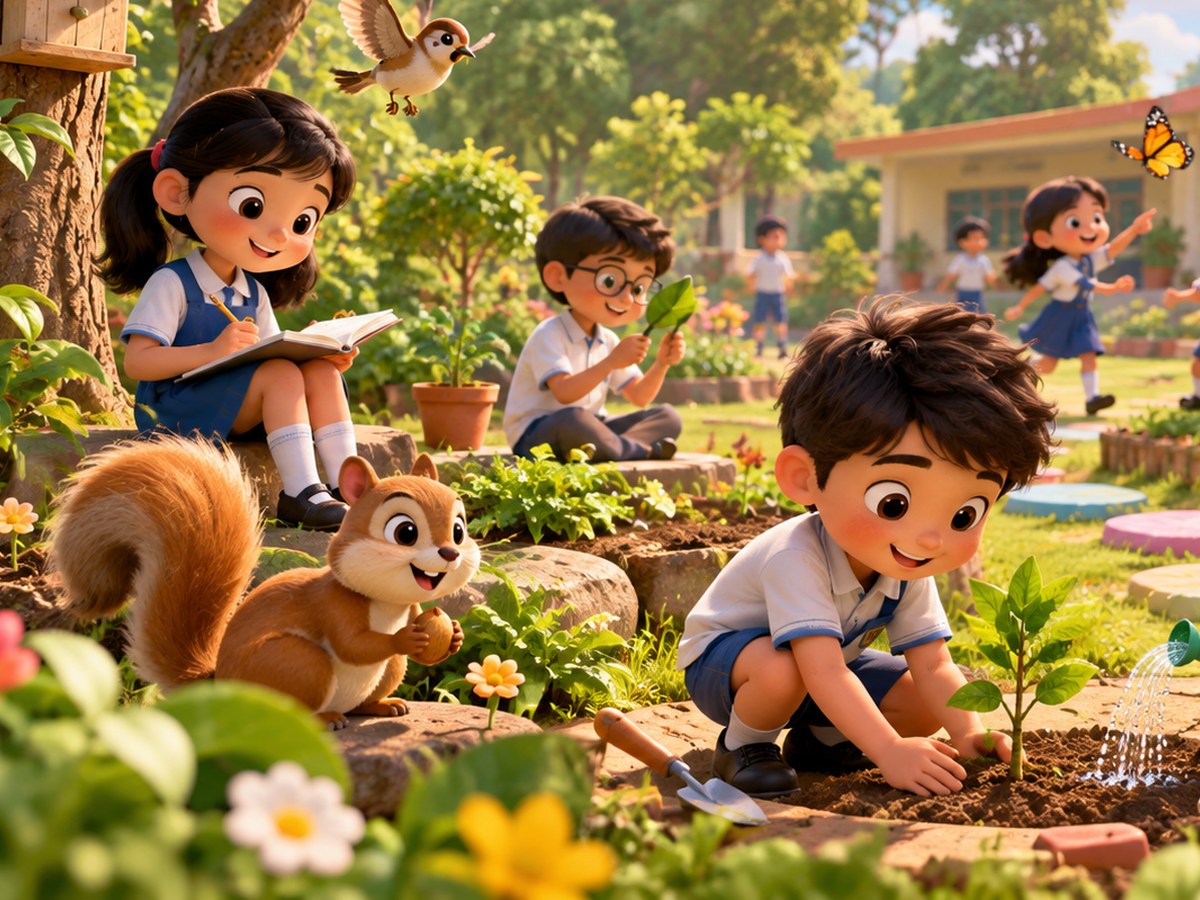
Learning outdoorsAI-generated concept art · read the 2019 source
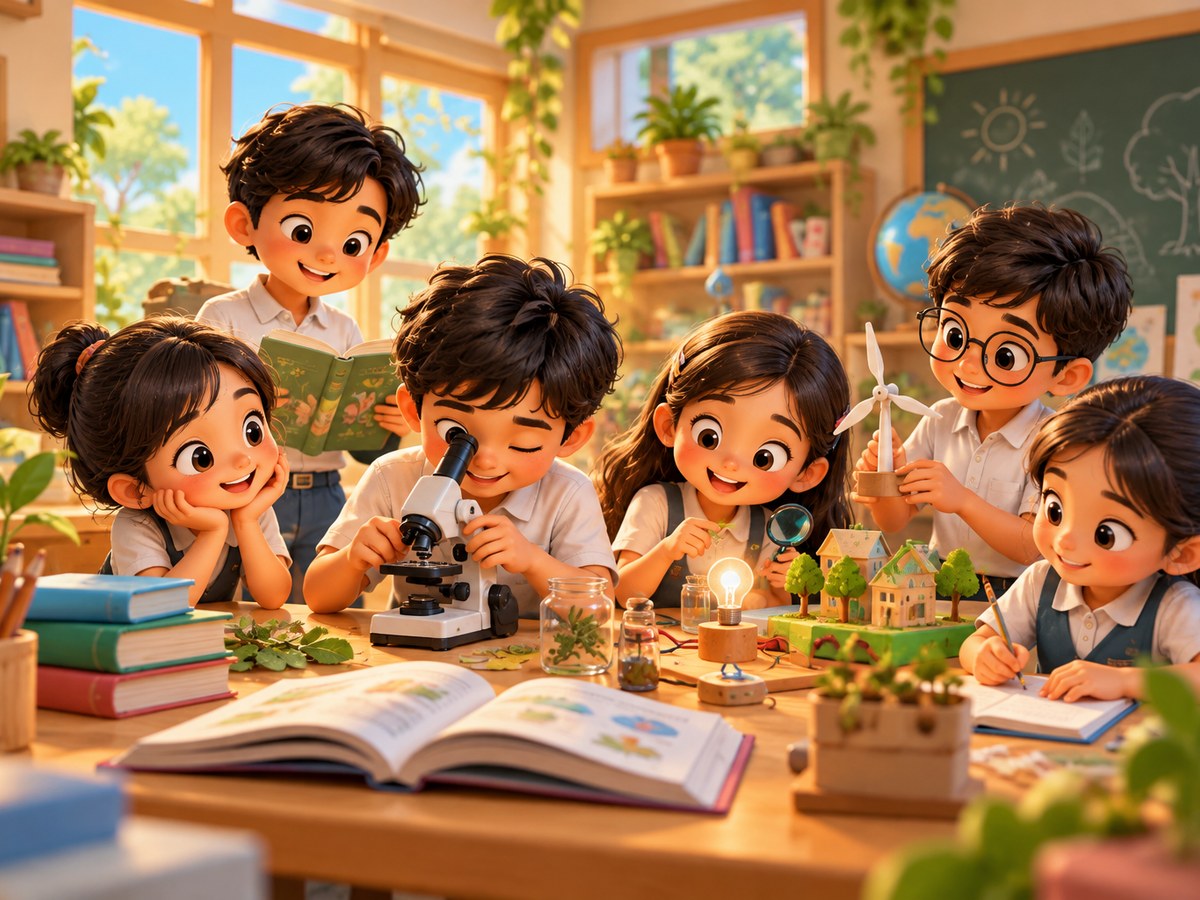
Learning togetherAI-generated concept art · read the 2019 source